Bathroom Paneling (Board and Batten, Wainscoting & More)
Wood paneling can work in bathrooms if you treat moisture like the enemy and build accordingly. The key is: location + sealing + ventilation.
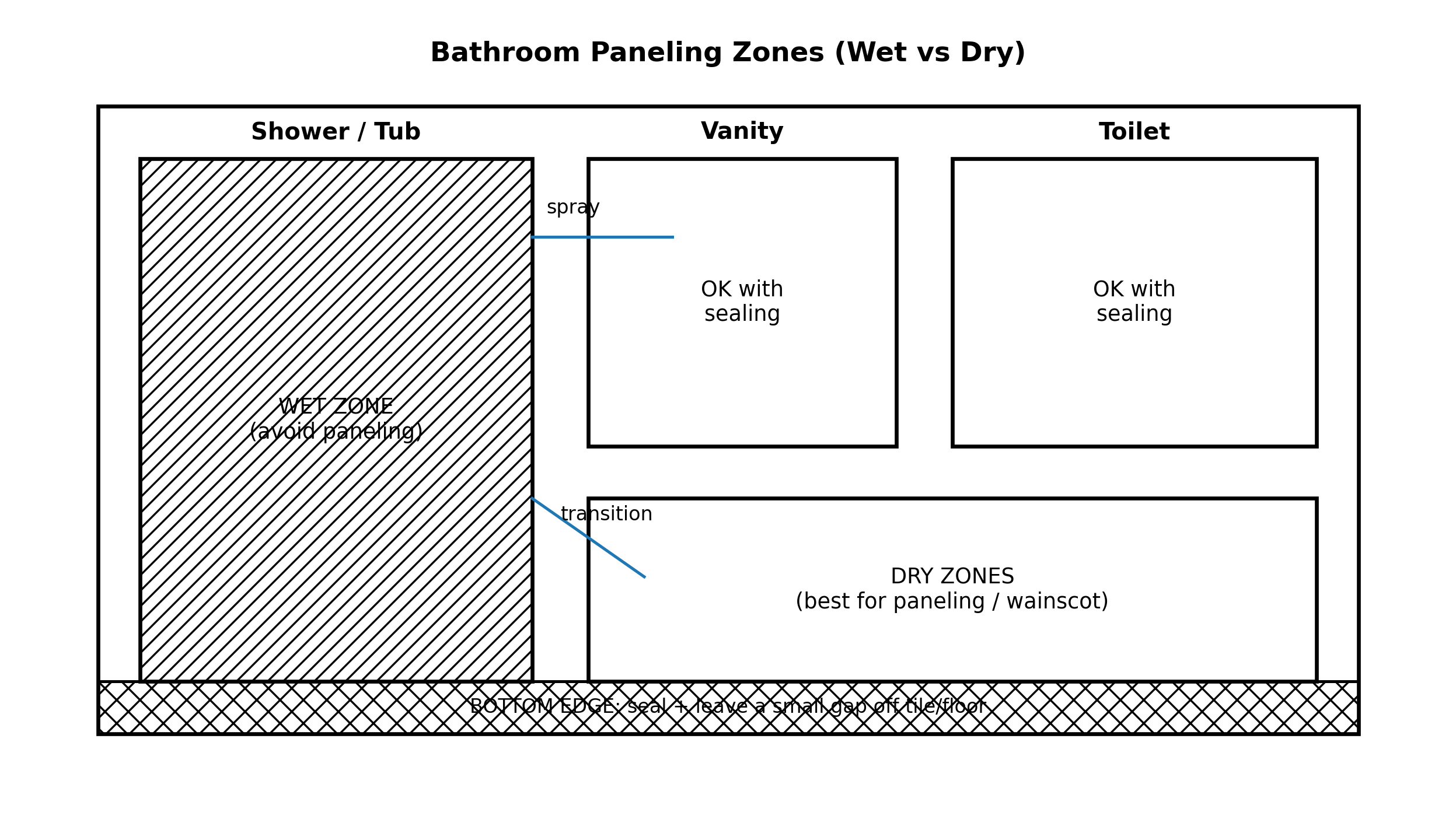
Where it works best
- Dry zones (outside the shower/tub spray area)
- Half baths (generally easiest)
- Behind toilets/vanities (with proper sealing and splash awareness)
- Accent walls away from direct water sources
Where to avoid it
If water can hit it repeatedly or sit on it, paneling will eventually lose.
- Inside shower/tub surrounds (wet zone)
- Any wall that takes direct spray or constant splashing
- Areas where the bottom edge can wick water from tile/floor
Best practices (the stuff that actually matters)
- Seal all faces and edges: especially end grain, cut edges, and panel backs (when practical).
- Protect the bottom edge: keep paneling/base slightly off tile (tiny gap) so it can’t wick water.
- Use caulk intentionally: seal transitions so water can’t get behind, but don’t “bathtub” ledges where water gets trapped.
- Ventilation rule: run the fan during showers + ~20 minutes after. If mirrors stay fogged, upgrade your ventilation (or actually use it).
- Plan for cleaning: bathrooms get wiped down; choose profiles and ledges that don’t collect water.
Material notes (what to pick)
- MDF: works in dry zones, but edges must be sealed aggressively and kept off the floor/tile to prevent swelling.
- Paint-grade plywood: generally more moisture-tolerant than MDF, still seal edges and cut ends.
- Solid wood: moves the most seasonally—can work, but requires stricter sealing and a maintenance mindset.
In bathrooms, paint grade is usually the smarter system because caulk + filler + paint can create a continuous barrier. Stain grade can work, but it’s less forgiving and more maintenance-dependent.
Finishing systems (paint vs stain)
Paint grade (recommended)
- Prime all surfaces (especially edges)
- Fill nail holes and sand smooth
- 2 finish coats with a durable trim enamel
Stain grade (higher maintenance)
- Stain (test on scraps)
- Multiple coats of a durable clear topcoat
- Accept that seams/filler won’t disappear like paint
Quick checklist
- Is it outside the wet zone?
- Are all edges/cut ends sealed?
- Is the bottom edge protected from wicking?
- Can water escape / dry (no trapped pockets)?
- Will the fan actually be used?